Employer Branding2026-10-08T08:39:36+00:00
EMPLOYER BRANDING

Employer branding consulting backed by our own research.

Employer branding consulting backed by our own research.

Qualified people compare employers the way customers compare brands. Our employer branding consulting draws on our own experiment with 1,093 participants on how credible employer seals change applicant behavior.

PEOPLE
CULTURE
OPPORTUNITIES
REAL IMPACT
PEOPLE
CULTURE
OPPORTUNITIES
REAL IMPACT
AS FEATURED IN

Featured in more than 450 news sites and business publications

Featured in more than 450 news sites and business publications

ABC
The Leader
SI
Morning News
NBC
Fox News
USA News
International Business Times
CBS
AP
WHY EMPLOYER BRANDING

Applicants compare before they apply


Applicants compare before they apply

They read reviews, check careers pages and increasingly ask AI tools. We help you work out what is genuinely good about working for you, back it with proof and make it visible wherever applicants look. Our approach rests on the research of our CEO, PhDr. Oliver Scharfenberg, and his book Praxisleitfaden Mitarbeitergewinnung.

OUR RESEARCH

What a credible employer seal changes?

What a credible employer seal changes?

The lift appeared only when the seal rested on transparent criteria and a real employee survey, not on payment (Scharfenberg and DIQP, 2025).

38% → 54%

Share of people likely to apply when a credible employer seal was added to the job ad.

18% → 6%

Share of people unlikely to apply.

1093 Participants

in a representative experiment.

60+ Employer Seals

Analyzed in the underlying doctoral dissertation.

OUR EMPLOYER BRANDING SERVICES

What we do for your employer brand

What we do for your employer brand

They read reviews, check careers pages and increasingly ask AI tools. We help you work out what is genuinely good about working for you, back it with proof and make it visible wherever applicants look. Our approach rests on the research of our CEO, PhDr. Oliver Scharfenberg, and his book Praxisleitfaden Mitarbeitergewinnung.

DELIVERABLES

What you receive from us

What you receive from us

EMPLOYER SEALS IN 2026

Not every seal carries the same weight

Not every seal carries the same weight

In his Praxisleitfaden, Oliver Scharfenberg sorts employer seals into four categories by how much they actually say:

Since 27 September 2026, the EU EmpCo Directive, implemented in Germany through the third amendment to the UWG, prohibits sustainability labels without a transparent certification scheme. Whether the same standard applies to employer seals is an open legal question. Employers are already well advised to choose seals that rest on an anonymous survey of the whole workforce, external verification and a transparent catalog of criteria.

TRANSPARENCY

Our Connection to Employer Seals

Our Connection to Employer Seals

Syntharis Group advises employers on certification. Our CEO, PhDr. Oliver Scharfenberg, is closely involved with the Deutsches Institut für Qualitätsstandards und -prüfung (DIQP) and acts as its scientific advisor; the DIQP’s “Top Arbeitgeber” seal was the one tested in his experiment. We say this openly because a seal is only worth something if people can trust it, and the same applies to the advice about it.

EUROPE
NORTH AMERICA
ASIA
AND BEYOND
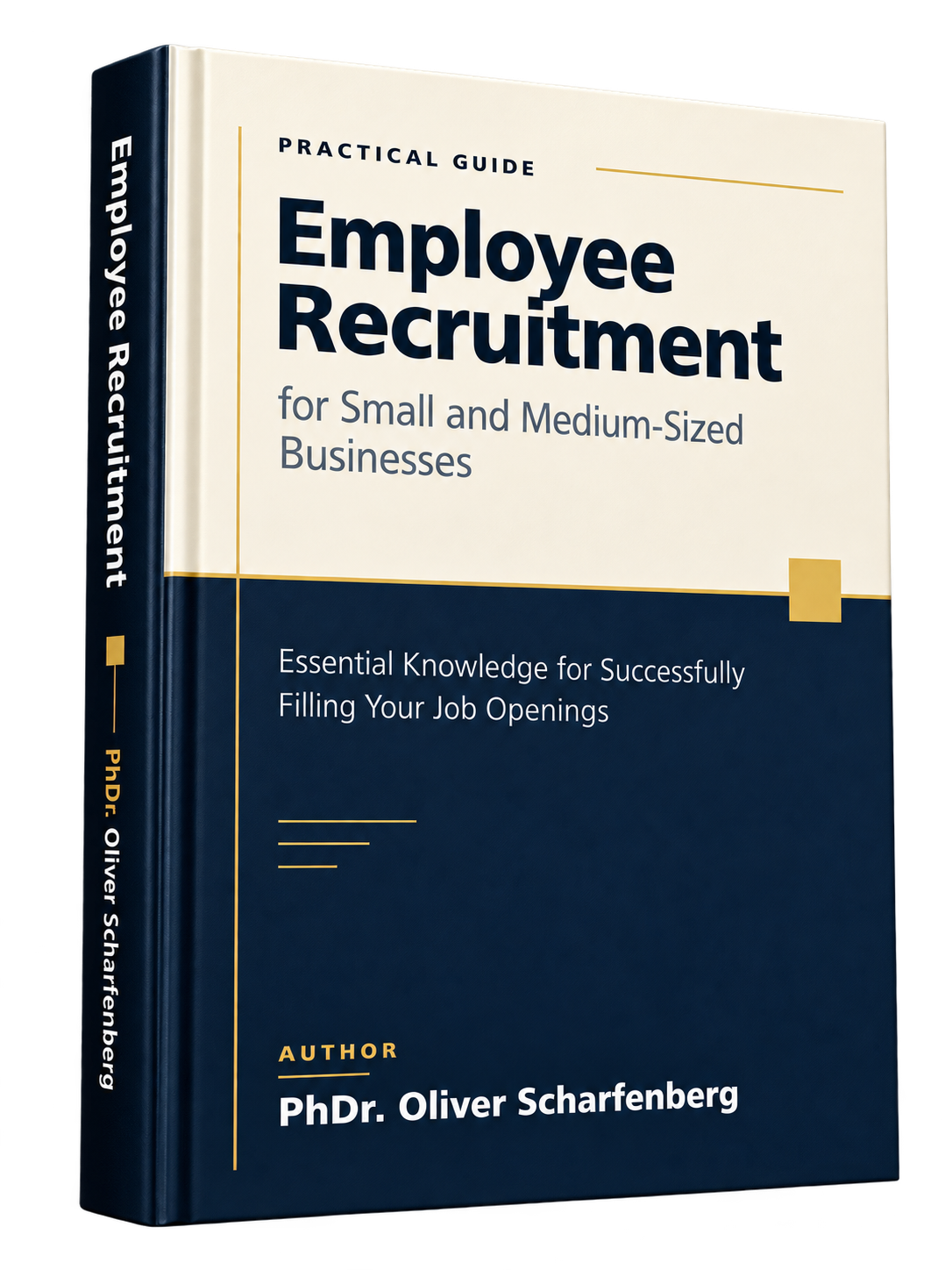
  • Employee recruitment visual for Syntharis Group employer branding and student recruitment
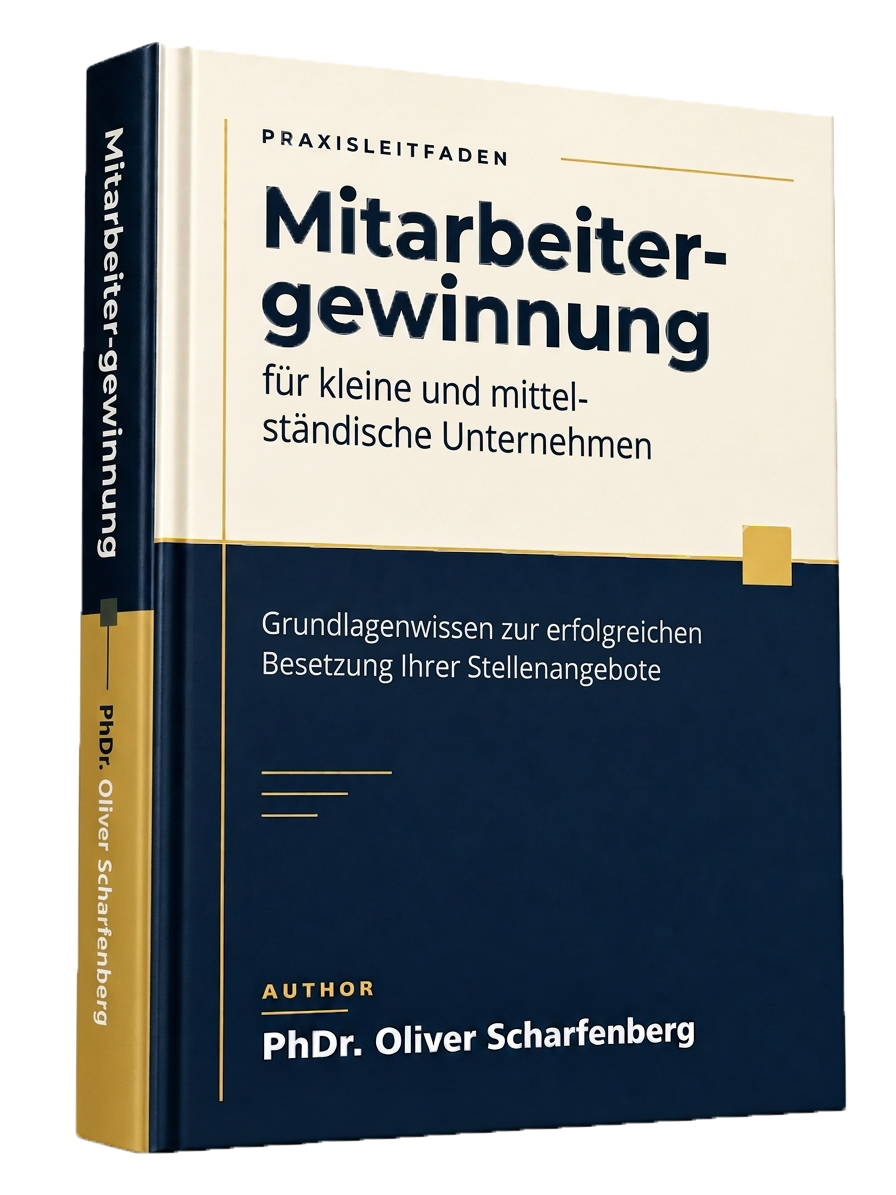
  • Recruiting know-how you can read first: The Praxisleitfaden Mitarbeitergewinnung

Author
PhDr. Oliver Scharfenberg
Founder, Syntharis Group

ISBN
978-3-9826678-3-6

THE BOOK BY OUR CEO

Recruiting know-how you can read first: PRACTICAL GUIDELINES – Recruiting for Small and Medium-Sized Businesses

Recruiting know-how you can read first: PRACTICAL GUIDELINES – Recruiting for Small and Medium-Sized Businesses

PhDr. Oliver Scharfenberg, CEO of Syntharis Group, has written down what he has learned from advising more than 750 companies on marketing and employer branding. His book is a practical guide for owners and managers who have to win skilled workers without a large HR department. It is the basis of our employer branding work, and you can download it free of charge.

What the book covers:

  • The candidate journey and why every touchpoint can decide whether someone applies
  • Measuring employee satisfaction: an employee survey in nine steps
  • Employer attractiveness, employer brand and employer image
  • Employer seals: four categories, the study with 1,093 participants and the EU EmpCo Directive
  • Careers page, social media, job boards and the legal requirements for job ads in 2026
  • AI in recruiting, including the EU AI Act and a 30-day plan for getting started
  • Onboarding in the first 90 days and eight steps to more applications
  • Templates: job ads, onboarding checklist, probation reviews, employee questionnaire

“Anyone who wants to convince does not need fine-sounding promises, but noticeable quality in everyday work.” (from the introduction, translated)

RESEARCH AND PUBLICATIONS

Advice backed by published research

Advice backed by published research

PhDr. Oliver Scharfenberg publishes regularly on employer branding, employer seals and recruiting. More than ten of his works are listed on ResearchGate, where they have been read over 2,000 times and cited in further research. They include:

Influence of Employer Quality Seals on Applicant Behavior (2024)

Article in the International Journal of Progressive Research in Engineering Management and Science.

Effect of Employer Seals on Potential Applicants (2025)

The randomized experiment with 1,093 participants.

Marktanalyse bestehender Gütesiegel für Arbeitgeber in Deutschland (2024)

Doctoral dissertation (PhDr.) at DTI University: a market analysis of more than 60 employer seals in Germany and their influence on applicant behavior.

Impact of Seals of Quality on Consumer Behavior (2024)

Article in the same journal, on how quality seals affect buying decisions.

Employer Branding: A Comprehensive Guide for U.S. Employers (2024)

Plus further guides for U.S. employers on becoming a top employer and attracting new employees.

Two books (2026)

The Praxisleitfaden Mitarbeitergewinnung and The AI Visibility SEO & GEO Playbook.

OUR PROCESS

How an employer branding project works

A structured, collaborative process to turn your people goals into measurable results.

ABOUT THIS PAGE

Based on Doctoral Research

Based on Doctoral Research

This page was written by PhDr. Oliver Scharfenberg, Founder & CEO of Syntharis Group. His doctoral dissertation analyzed more than 60 employer seals in Germany, and his experiment with 1,093 participants measured their effect on applicants.

Last reviewed: 30 September 2026.

FAQ

Frequently Asked Questions

Frequently Asked Questions

What is employer branding, and why does it matter?2026-10-07T05:14:11+00:00

Employer branding is how an organization is perceived as a place to work and the deliberate effort to shape that perception. It covers what the company offers employees, how it communicates this and whether the everyday experience matches the promise.

It matters because qualified candidates compare employers before they apply, often through career sites, review platforms, social media and increasingly AI tools. A clear and credible employer brand leads to more suitable applications, faster hiring and lower turnover, because people join with realistic expectations.

What is an employer value proposition (EVP)?2026-10-07T05:14:28+00:00

An employer value proposition is the core answer to the question: why should a qualified person work for you rather than a competitor? It summarizes what employees receive, such as pay and benefits, development opportunities, culture, purpose, flexibility and stability, and what the company expects in return.

A good EVP is based on facts. We develop it from interviews and surveys with current employees, feedback from applicants, an analysis of competitors in the labor market and the goals of management. The EVP then guides job ads, careers pages, social media and interviews.

What is the difference between employer brand and employer image?2026-10-07T05:14:43+00:00

The employer brand is what a company deliberately defines and communicates about itself as an employer: its values, what it offers and what it expects. The employer image is how applicants, employees and the public actually perceive it. The two often differ.

Employer branding closes this gap from both sides: by communicating what is genuinely good more clearly, and by improving what does not yet match the promise. As PhDr. Oliver Scharfenberg, CEO of Syntharis Group, writes in his Praxisleitfaden Mitarbeitergewinnung, applicants quickly notice whether an employer’s claims match reality.

Do employer seals and awards really increase applications?2026-10-07T05:14:57+00:00

Employer seals can increase applications, but only if they are credible. Research by PhDr. Oliver Scharfenberg, CEO of Syntharis Group, compared more than 60 employer seals and tested their effect in a representative experiment with 1,093 participants. Adding a credible employer seal to a job ad raised the share of people who said they would likely apply from 38% to 54%, a gain of almost 16 percentage points. The share who were unlikely to apply fell from 18% to 6%.

The condition behind that lift is credibility: it appears when a seal rests on transparent criteria and real verification (ideally an anonymous survey of the whole workforce) rather than on payment. In his Praxisleitfaden Mitarbeitergewinnung, Scharfenberg sorts seals into four categories, from representative employee surveys (the gold standard) to seals based only on online reviews. Since 27 September 2026, the EU EmpCo Directive, implemented in Germany through the third amendment to the UWG, prohibits sustainability labels without a transparent certification scheme; whether the same standard applies to employer seals is still an open legal question. Syntharis advises employers on which certifications are worth pursuing and how to communicate them without overstating what they prove.

Which employer seals are credible?2026-10-07T05:15:10+00:00

The most credible employer seals are based on an anonymous survey of the whole workforce. Seals differ considerably in what they actually say. The Praxisleitfaden Mitarbeitergewinnung by our CEO sorts them into four categories:

  • Representative employee survey: the whole workforce is surveyed anonymously. This is the gold standard, because the seal reflects the real internal mood and doubles as a diagnostic tool for HR.
  • Self-assessment with verification: the company provides information that the awarding body checks. Useful for a first positioning, but without the employees’ view.
  • Sample survey: only a small selection of employees is asked, which is scientifically weak and raises questions internally about who was allowed to take part.
  • Study- or review-based: the seal relies on external data such as anonymous online reviews. It is often unclear whether real employees wrote them.

Before booking a seal, check which category it belongs to, who awards it and whether the criteria are published.

Does the EU EmpCo Directive apply to employer seals?2026-10-07T05:15:33+00:00

Whether the EmpCo Directive also covers employer seals is still an open legal question. The directive, (EU) 2024/825, is aimed at greenwashing. In Germany it was implemented through the third amendment to the Act against Unfair Competition (UWG), which has fully applied since 27 September 2026. Sustainability labels that are not based on a transparent certification scheme are now prohibited.

For employer seals, experts discuss “social washing”, meaning unproven claims about fair working conditions or a good company culture. The Praxisleitfaden Mitarbeitergewinnung therefore recommends a precautionary approach: an anonymous survey of the whole workforce, external third-party verification and a transparent catalog of criteria. This is general information, not legal advice; for a specific case, consult a lawyer specializing in competition law.

How should we communicate an employer seal?2026-10-07T05:15:41+00:00

Show it where applicants make their decision: in job ads, on the careers page, in your LinkedIn profile and in the email signatures of your recruiters. In the study by PhDr. Oliver Scharfenberg, placing a credible seal in a job ad alone raised the share of people likely to apply from 38% to 54%.

Say what the seal is based on, for example “based on an anonymous survey of all employees”, name the awarding body and the year, and do not claim more than it proves. Use the survey results internally as well: they show where you already do well and where there is room to improve, which makes the seal a diagnostic tool rather than decoration.

How do review platforms like kununu and Glassdoor affect our employer brand?2026-10-07T05:15:51+00:00

Strongly, because applicants read them before they apply, and AI assistants use them when asked what a company is like as an employer. Old or one-sided reviews can therefore shape your image long after the situation has changed.

Claim your profiles, keep company information up to date, respond to reviews professionally, including critical ones, and encourage current employees to share honest experiences. Never write or buy fake reviews; apart from the legal risk, doing so destroys the very trust you want to build.

How do AI assistants describe us as an employer, and can we influence it?2026-10-07T05:16:01+00:00

You can influence it, and the first step is to ask the assistants yourself. Prompts such as “good employers for [role] in [city]” or “what is it like to work at [company]?” in ChatGPT, Perplexity and Gemini show how you appear. Often the answers rely on old reviews and scattered job-board data.

The employer-branding case in The AI Visibility SEO & GEO Playbook by our CEO, PhDr. Oliver Scharfenberg, describes what helps: an employer-facts page on your website, published benefits and culture proof, employee-survey results where available, updated LinkedIn, review and career-directory profiles, and credible third-party certification or coverage. Syntharis does this AI-visibility work alongside employer branding, so credible signals also show up where candidates now ask their questions.

How do you measure the success of employer branding?2026-10-07T05:16:09+00:00

We use measurable HR indicators, recorded before the project and tracked afterwards. The most common are the number and quality of applications per vacancy, time-to-hire, cost-per-hire, offer acceptance rate, early turnover in the first six months, employee engagement and ratings on employer review platforms.

We also check how your company appears when candidates ask AI tools about you as an employer, because this has become a new first impression. The AI Visibility SEO & GEO Playbook recommends an employer-facts page, verifiable survey results and consistent profiles on LinkedIn and review platforms, so assistants have current evidence instead of old reviews.

Find out how attractive you are as an employer

Find out how attractive you are as an employer

In a free consultation we look at how employees, applicants and AI tools see your company today, and where the quickest gains are.